ASEAN’s energy commitments will mean more when people can feel the difference.
The promise of regional energy cooperation is easy to understand: countries sharing electricity, drawing on different energy sources, and supporting one another when supplies fall short.
For the people who depend on that power, the promise is more immediate. Will electricity be reliable? Will costs become more predictable? Will cleaner energy reach their communities?
These questions should shape how ASEAN delivers on its energy commitments.
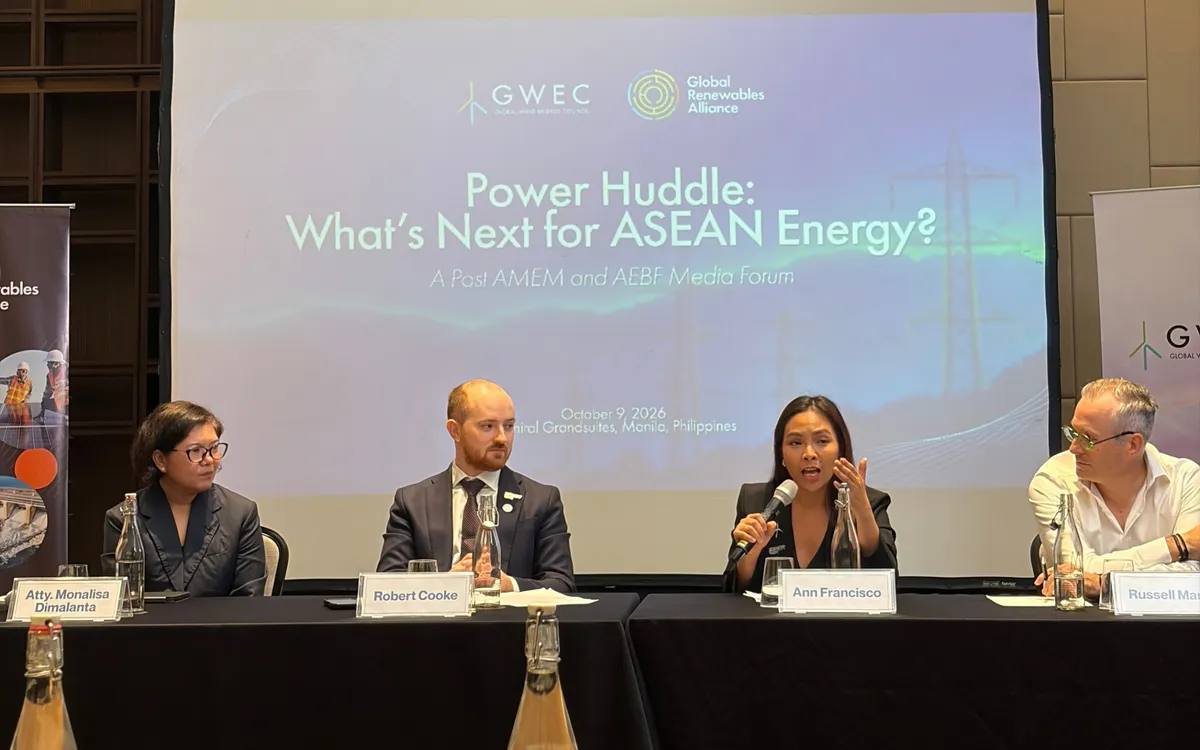
At the “Power Huddle: What’s next for ASEAN energy?” organized by the Global Renewables Alliance and Global Wind Energy Council, discussions focused on the work ahead following the 44th ASEAN Ministers on Energy Meeting and the 26th ASEAN Energy Business Forum. The challenge is to turn regional ambition into projects with clear responsibilities, realistic timelines, and financing that allows construction to move forward.
The ASEAN Power Grid is part of that ambition. Connecting electricity systems across borders can give countries more options to meet demand and support one another during shortages. But making those connections useful takes more than building transmission lines. Countries also need shared standards, workable arrangements for trading electricity, and confidence that power can reach the places where it is needed.
For the Philippines, this brings the conversation closer to home.
Preparing to exchange power with neighboring countries also means strengthening the system within our own borders.
- More renewable energy needs grids that can carry it from where it is generated to where people live and work.
- Storage and other sources of flexibility can help keep supply reliable as more solar and wind enter the system.
- Improving connections between islands can help more communities benefit from these investments.
These are decisions with consequences for everyday life. A business needs dependable electricity to keep operating and plan its expenses. A household needs power for cooking, studying, working, and staying connected. The value of an energy project becomes tangible when it improves those conditions.
By the next ASEAN Summit, we should be able to ask which projects have advanced, what financing has been secured, and whether improvements are reaching communities. Clear answers can help governments, investors, businesses, and the public see where cooperation is working and where more effort is needed.
The question is whether we can build an energy system that makes regional cooperation felt in everyday life, through reliable power, more predictable costs, and wider access to cleaner energy.