
Beyond the Fuel Bill: Why Rising LNG Costs Matter for the Philippines’ Energy Future
For Philippine businesses, the cost of electricity shapes decisions about production, investment, and economic growth. When that cost is tied to imported fuel, planning becomes more difficult. A shift in global prices, a weaker peso, or a disruption to supply routes can put pressure on operating expenses.

This challenge was at the center of Powering the Philippines: From Energy Crisis to Energy Resilience, a public policy forum organized by the Race to Net Zero Philippines (RtNZ PH), the Institute for Energy Economics and Financial Analysis (IEEFA), and the Institute for Climate and Sustainable Cities (ICSC). Held at the Asian Institute of Management in Makati on 21 October 2026, the forum brought together experts from government agencies and major banking and financial institutions to examine the country’s energy choices.
The discussions connected rising liquefied natural gas (LNG) costs with the choices that determine electricity bills: how utilities procure power, how projects secure financing, and how quickly renewable energy can reach consumers.
When global shocks reach the electricity bill
The Philippines spent USD 2 billion, approximately PHP 126 billion, on LNG shipments between January 2025 and July 2026. That spending comes with continuing exposure to movements in fuel prices and exchange rates.
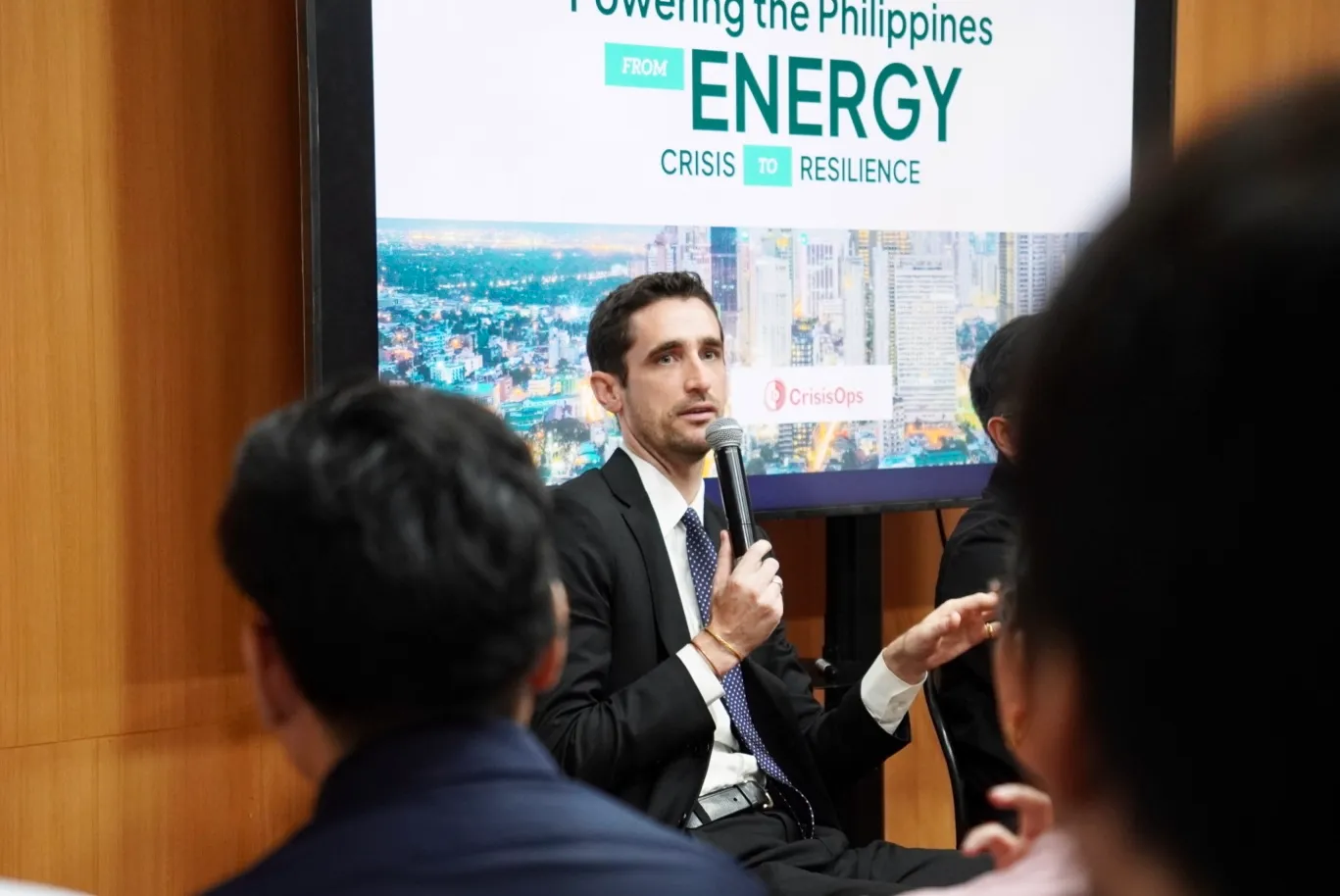
According to Sam Reynolds, IEEFA’s research lead for gas/LNG in Asia, the cost of generating electricity from imported LNG could surge by 143% or more as rising fuel and equipment prices combine with peso depreciation.
At current prices, LNG-fired generation costs about PHP 12.7 per kilowatt-hour before transmission, distribution charges, and taxes. Recent generation rates at some LNG-fired plants have exceeded PHP 15 per kilowatt-hour.
About half of the country’s LNG is purchased on the spot market. IEEFA reported that Asian spot prices tripled after the Middle East conflict began and are expected to remain high through 2028. A weaker peso adds to that exposure by increasing the local-currency cost of dollar-priced fuel.
“Every dollar committed to imported fuel is a dollar exposed to the next shock, while renewable energy keeps getting cheaper,” said Reynolds.
Why neighbouring communities can pay different prices
For Engr. Jephraim Manansala, Chief Data Scientist at ICSC, understanding electricity costs also means examining what utilities buy, and the terms under which they buy it.
Engr. Manansala identified generation charges as the largest component of electricity bills. Power supply contracts, fuel pass-through provisions, spot-market exposure, and transmission constraints all influence what consumers ultimately pay.
The differences between utilities illustrate why procurement matters. Manansala highlighted BOHECO I’s reliance on geothermal power, whose rates remained insulated from global fuel-price disruptions. This example shows how domestic renewable energy sources and procurement choices can help manage costs and exposure to imported fuel.
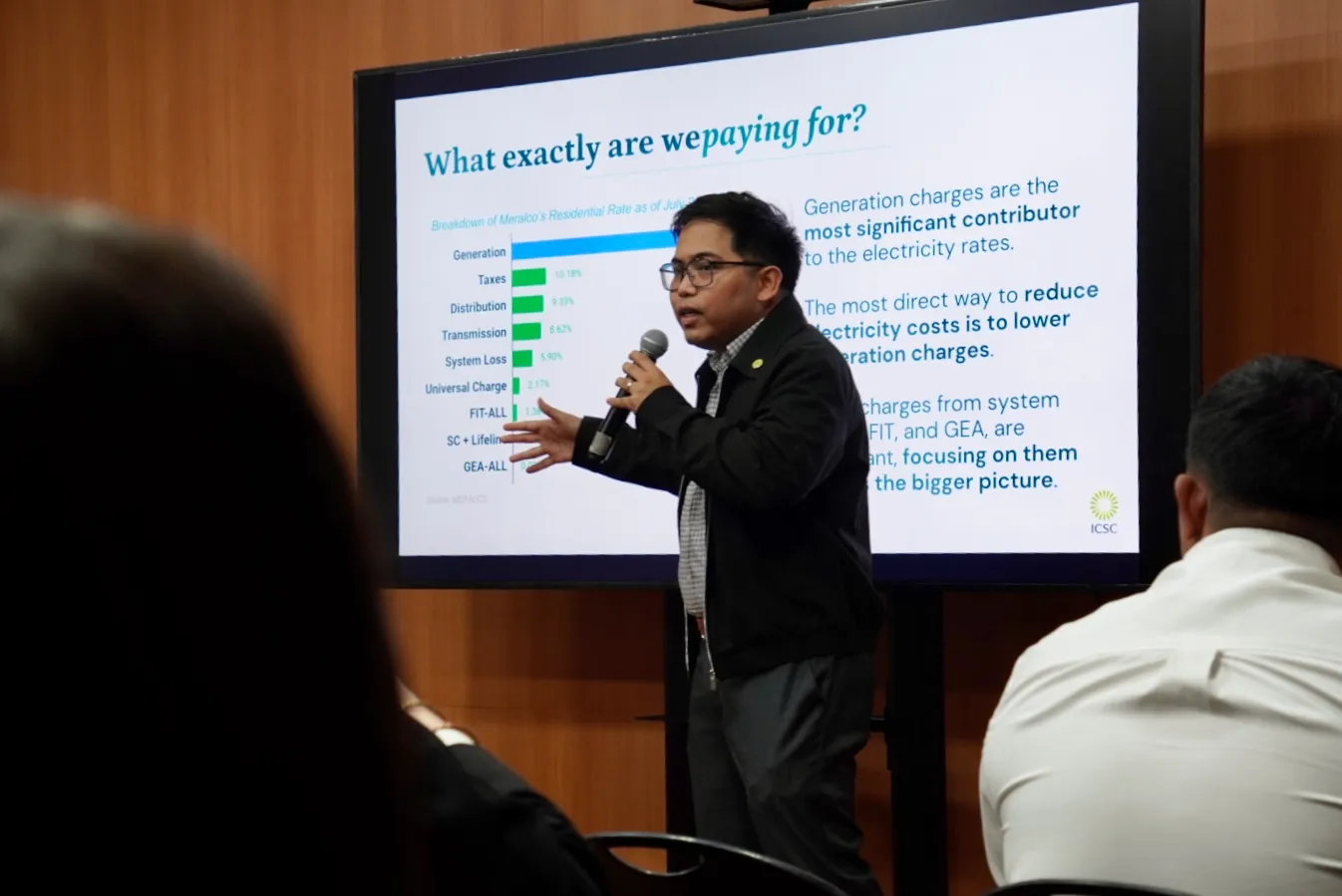
“Energy security is not just about having enough megawatts,” said Manansala. “It is about keeping the lights on when fuel markets, exchange rates and supply routes are disrupted.”
The costs and risks of financing new power plants
For LNG projects, Ceejay Hernandez, Head of Sustainability at HSBC Philippines, highlighted the need to account for fuel-price, logistics, and foreign-exchange risks, alongside future costs of meeting decarbonization requirements.
Hernandez showed falling renewable energy and battery costs alongside rising gas-plant construction costs, strengthening the economic case for renewable investment.

“A transition fuel should transition at some point, right? So the questions around when you transition and how you transition are becoming part of the policies for new gas plants,” said Hernandez.
He also connected renewable electricity with investment opportunities. Major technology companies’ sustainability requirements are influencing demand for renewable power, making its availability increasingly relevant to countries seeking data-centre investment.
What the same spending could build
Hernandez’s financing perspective raises a practical question: what could the money spent on imported fuel build instead?
The scale of LNG spending offers a way to consider the alternatives. According to IEEFA, the approximately USD 84 million spent on a single LNG shipment could instead purchase solar panels with about 930 megawatts of capacity.
IEEFA’s analysis found that new solar power paired with battery storage is already cheaper in the Philippines than continuing to operate existing gas plants.
“Volatility in fuel, equipment and currency are challenging the growth of gas in the country. Meanwhile, the economics for clean technologies are there, but their ability to scale and implement is not. That needs to be a major focus for the entire system moving forward,” said Reynolds.
His assessment places implementation at the heart of the transition. Competitive technology costs need to be matched by policy, financing, and project delivery that allow renewable energy and storage to reach consumers.
For businesses, resilience starts with power they can plan around
For companies pursuing emissions reductions, access to renewable electricity also matters for business competitiveness. They need power that supports their climate commitments while helping them manage costs and maintain reliable operations.
“Philippine companies cannot plan or compete on power costs that swing with every shock in the global fuel market,” said Paulo Burro, Senior Strategy Consultant at Race to Net Zero Philippines.

“Businesses that have committed to cutting emissions need clean power that is also stable in price, and that depends on policy and financing that make renewables and storage easier to build.”
The forum showed that energy resilience also means understanding what shapes electricity costs. Fuel sources, supply contracts, financing, and infrastructure all affect the price consumers pay. As these discussions inform future decisions, the measure of progress will be reliable electricity that businesses and communities can access and afford.